The Role of Gut Microbiota in Sarcopenia and Potential Probiotic Treatments

dna bacterias 1 min

Sarcopenia, an age-related muscle disorder, increases the risk of adverse clinical outcomes, but current treatment options are limited. Recent research highlights the potential role of gut microbiota in sarcopenia. The study compared gut microbiota and metabolites in older adults with and without sarcopenia, followed by fecal microbiota transplantation (FMT) in mice to investigate causality. Specific probiotics, such as Lacticaseibacillus rhamnosus (LR) and Faecalibacterium prausnitzii (FP), showed promise in enhancing muscle health and function in aged mice, primarily by improving mitochondrial activity and intestinal immune health.

Microbial Composition and Sarcopenia:

  • Older adults with sarcopenia displayed distinct gut microbiota and metabolite profiles, including differences in Paraprevotella, Lachnospira, short-chain fatty acids (SCFAs), and purine metabolites.
  • FMT from sarcopenic donors to mice resulted in reduced muscle mass and strength in the recipients.

Probiotics and Muscle Health:

  • Probiotics Lacticaseibacillus rhamnosus (LR) and Faecalibacterium prausnitzii (FP) were positively associated with muscle health in older adults.
  • In aged mice, these probiotics improved muscle mass, strength, and mitochondrial function.

Mechanisms of Action:

  • Transcriptomics revealed enrichment of genes related to the tricarboxylic acid (TCA) cycle after probiotic treatment.
  • Metabolic analysis indicated increased TCA substrates in LR and FP supernatants.
  • Probiotics enhanced mitochondrial density, ATP content, NAD+/NADH ratio, mitochondrial dynamics, and biogenesis proteins.

Additional Benefits:

  • Tight junction proteins in the colon and intestinal immune health (e.g., reduced CD8+IFNγ+ T cells) were improved by LR and the combination of probiotics.

Conclusion:

  • Gut microbiota dysbiosis contributes to sarcopenia, and probiotics targeting muscle health could be a promising therapeutic strategy.
  • Further clinical studies are necessary to validate these findings in humans.

Article DOI.

Image Source: Freepik.com

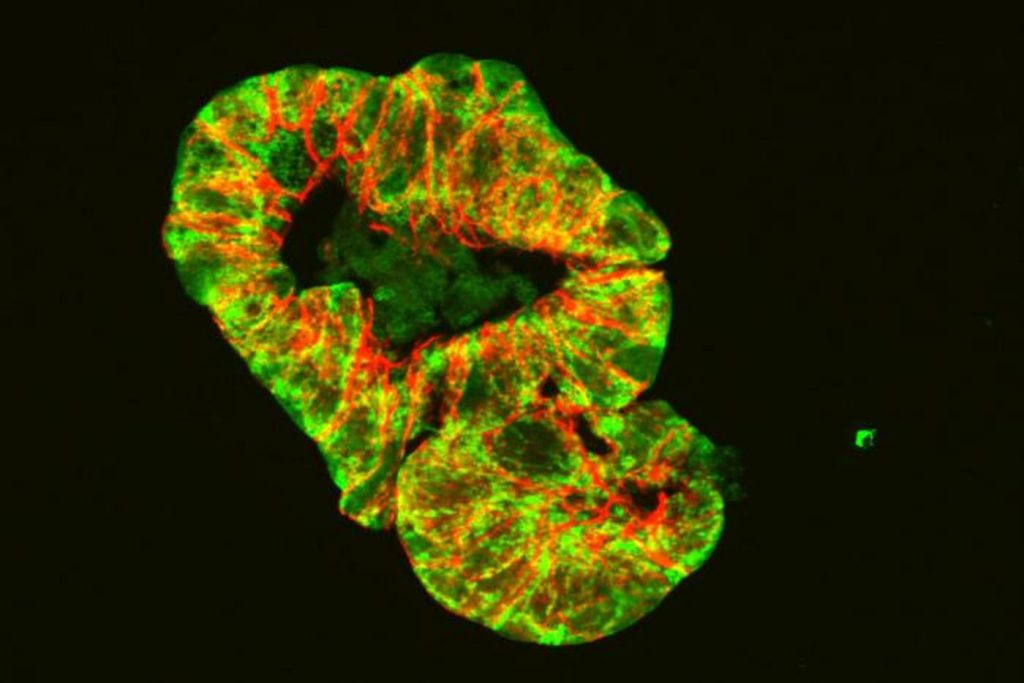
Mitochondrial Dysfunction Disrupts Microbiome, Leading to Crohn’s Disease

A new study published in Cell Host & Microbe reveals how mitochondrial dysfunction can disrupt the gut microbiome, contributing to the development of Crohn’s disease. Researchers from the Technical University of Munich (TUM), led by Prof. Dirk Haller, used intestinal organoids and a mouse model to investigate how mitochondrial impairment influences gut tissue and microbiome composition.

The disruption of the Hsp60 gene, essential for mitochondrial function, led to changes in intestinal epithelium and gene expression similar to those observed in Crohn’s patients. Moreover, significant shifts in the gut microbiome were noted, reinforcing the link between mitochondrial dysfunction and intestinal inflammation.

These findings present a potential new therapeutic approach for Crohn’s, shifting the focus from inflammation to restoring mitochondrial function and microbiome balance. Prof. Haller emphasized that targeting mitochondrial pathways or microbiome-mitochondria interactions could offer a promising avenue for treatment.

Image Description:

An intestinal organoid model with epithelial cells (red) and mitochondria (green). Credit: Lehrstuhl für Ernährung und Immunologie / TUM.

Source: https://www.labroots.com/trending/cell-and-molecular-biology/27926/mitochondrial-dysfunction-disrupt-microbiome-cause-crohn-s

Key Findings: Sulfur-Producing Bacteria and Crohn’s Disease Symptoms

Researchers from the University of Michigan identified sulfur-producing bacteria as potential contributors to persistent symptoms in Crohn’s disease patients, even in remission without active inflammation.

  • Microbiome Connection: Patients with lingering symptoms showed a significant increase in these bacteria within their gut microbiome.
  • Role of Sulfur Compounds: These bacteria produce hydrogen sulfide, which can disrupt intestinal permeability and heighten visceral sensitivity, potentially exacerbating symptoms.
  • Symptom Mechanism: The findings suggest a microbial origin for persistent symptoms, unrelated to active inflammation, pointing to microbiome imbalances as a therapeutic target.
  • Dietary Implications: Researchers are considering the potential benefits of a sulfur-restricted diet for patients with these microbiome characteristics.
  • Future Research: Further studies are needed to confirm the causal relationship and explore targeted treatments, including dietary interventions.

This discovery provides new insights into the non-inflammatory mechanisms driving symptoms in Crohn’s disease and opens pathways for alternative therapeutic approaches.

Access Full Eurekalert Article.

Link Between Gut Infections and Alzheimer’s Disease Uncovered

A new study led by researchers from Arizona State University (ASU) and Banner Alzheimer’s Institute has uncovered a compelling link between chronic gut infection by cytomegalovirus (HCMV)—a common virus—and the development of Alzheimer’s disease in a subset of individuals.

The study suggests that in some cases, HCMV may persist in an active state in the gut, travel to the brain via the vagus nerve, and contribute to hallmark changes associated with Alzheimer’s, including amyloid plaques and tau tangles.

The researchers found that this form of Alzheimer’s may affect 25% to 45% of patients, featuring distinct biological markers such as specific immune cells and antibodies linked to HCMV. Their findings highlight the role of microglia, the brain’s immune cells, which may drive chronic inflammation and neuronal damage when responding to the virus.

By analyzing tissue samples from the gut, vagus nerve, and brain, the study revealed how HCMV could migrate from the intestine to the brain. Using human brain cell models, the researchers demonstrated that exposure to HCMV can lead to the production of amyloid and phosphorylated tau proteins, ultimately causing neuronal degeneration.

The implications of this research are significant. The team is currently developing a blood test to identify individuals with active HCMV infections and hopes to explore antiviral treatments to prevent or slow down the progression of this specific form of Alzheimer’s disease.

This groundbreaking study, published in Alzheimer’s & Dementia: The Journal of the Alzheimer’s Association, demonstrates the potential for infections to influence neurodegeneration and offers new hope for targeted therapies.

Full Press Release on Eurekalert.

Ketone Bodies: A Promising Link Between Metabolism, Mitochondrial Function, and Brain Health

An insightful study published in Cell Chemical Biology by researchers at the Buck Institute for Research on Aging has unveiled new roles for ketone bodies beyond their well-known function in energy production. The research focuses on the impact of these metabolites, particularly β-hydroxybutyrate, on brain function in the context of aging and Alzheimer’s disease.


Key findings from the study include:


  • Direct Interaction with Misfolded Proteins: The ketone body β-hydroxybutyrate interacts directly with misfolded proteins, changing their solubility and structure to promote their clearance from the brain through autophagy.
  • Enhanced Protein Quality Control: Ketone bodies and similar metabolites have significant effects on the proteome, improving protein quality control mechanisms within the brain.
  • Experimental Validation in Animal Models: In animal models, feeding ketone esters to mice facilitated the clearance of insoluble proteins, preventing their pathological aggregation. In nematode models expressing human amyloid beta, ketone treatment restored mobility, indicating a reversal of protein-induced paralysis.
  • Potential Therapeutic Avenue: These findings suggest that manipulating ketone body levels could be a powerful strategy for clearing damaged proteins from the brain, offering a potential therapeutic approach for tackling brain aging and neurodegenerative diseases.

This study introduces a novel connection between metabolism, ketone bodies, and aging, proposing that ketone bodies act as signaling molecules that influence protein homeostasis in the brain. The potential for these findings to inform future therapeutic strategies for brain health is significant, providing new opportunities for addressing neurodegenerative diseases.

Source.

Image Credits:  Sid Madhavan, Buck Institute for Research on Aging